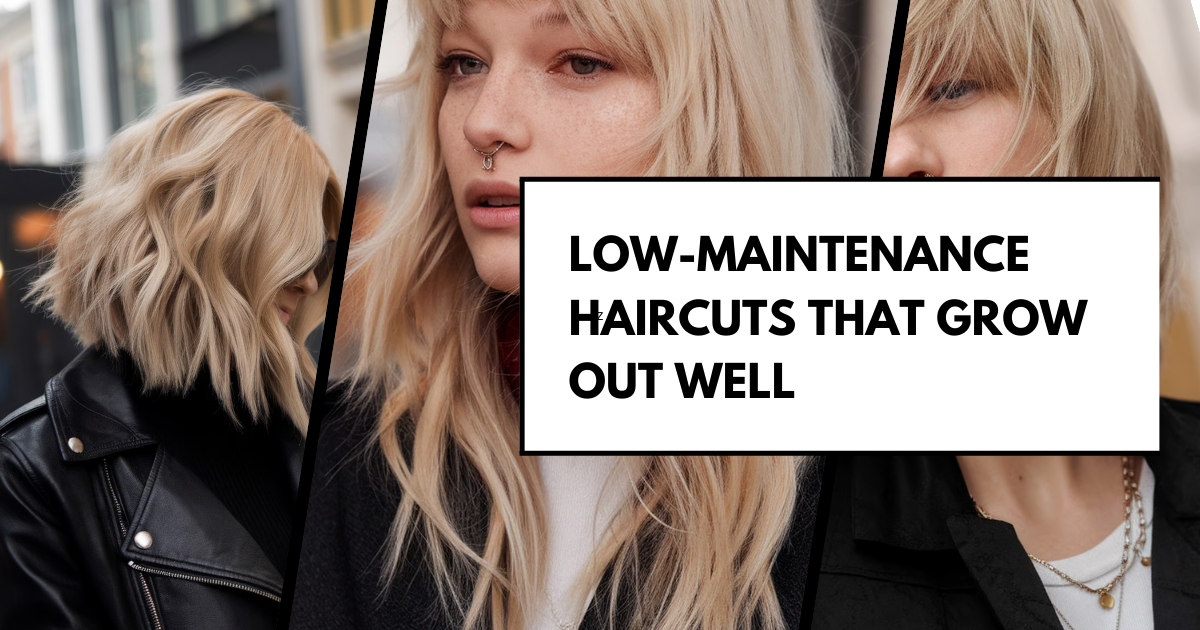
Haircuts usually look great for about two weeks. Then life happens, roots show up, layers soften, and suddenly you’re wondering if you chose wrong. Low-maintenance haircuts aren’t about skipping the salon forever — they’re about choosing shapes that still make sense as time passes.
These are haircuts that don’t punish you for missing an appointment, growing your hair out, or simply not wanting to style it every morning.
What “Low-Maintenance” Actually Means
Low-maintenance doesn’t mean boring or shapeless. It usually means:
- the cut keeps its structure as it grows
- layers blend instead of creating awkward shelves
- it looks fine air-dried or lightly styled
- it doesn’t rely on constant trims to look intentional
In other words, the haircut works with your hair, not against it.
1. Blunt Lob (Long Bob)

The blunt lob is one of the most forgiving haircuts out there. Because the ends are cut straight across, it grows evenly instead of turning wispy or uneven.
As it grows, it simply becomes a longer bob — no awkward phase required. It works especially well for people who don’t love layers or who prefer simple styling.
Why it grows out well: no short pieces to lose shape
Styling effort: minimal (straight or soft waves)
2. Long Layers (Kept Subtle)

Long layers can be low-maintenance if they’re done conservatively. The key is avoiding dramatic face-framing pieces that grow out too fast.
Soft, blended layers add movement without creating obvious steps as your hair grows. This cut often looks better after a few weeks than it does on day one.
Why it grows out well: layers blend into length
Best for: medium to long hair, slight wave or straight textures
3. Collarbone-Length Cut

Haircuts that hit right at the collarbone tend to behave well. They’re long enough to tie back, but short enough to feel fresh.
As the hair grows, it passes through flattering lengths rather than awkward ones. It also works across seasons, which helps if you don’t want to cut your hair often.
Why it grows out well: length transitions smoothly
Bonus: easy to style or ignore
4. Soft Shag (Modern, Not Choppy)

The modern shag is much softer than the dramatic versions from years ago. When done correctly, it relies on movement rather than sharp contrast.
As it grows, it simply becomes more relaxed. The texture remains intentional, even if the length changes.
Why it grows out well: texture disguises growth
Best for: wavy or naturally textured hair
5. Curtain Bangs (Long, Blended Version)

Short bangs are high-maintenance. Long curtain bangs, on the other hand, grow out gracefully.
They frame the face at first, then slowly blend into layers. Even when you stop styling them, they don’t immediately look wrong.
Why they grow out well: they become face-framing layers
Maintenance note: occasional trim helps, but not required
6. One-Length Long Hair

Sometimes the lowest maintenance cut is no layers at all. One-length long hair grows evenly and doesn’t rely on precision.
It may look simple, but that simplicity is what keeps it from looking messy as time goes on.
Why it grows out well: nothing to lose shape
Best for: straight to slightly wavy hair
7. Textured Bob (Not Too Short)

Bobs can be tricky, but a slightly longer, textured bob tends to age well. The texture prevents blunt edges from looking heavy as it grows.
Avoid super sharp chin-length cuts if you don’t want frequent trims. A bob that hits just below the chin tends to soften nicely over time.
Why it grows out well: texture hides growth
Styling effort: light waves or air-dry cream
8. Medium-Length Cut with Minimal Face Framing

A mid-length cut with just a touch of face framing offers balance. The framing softens features without becoming the main focus.
As it grows, the framing pieces simply lengthen and blend instead of becoming awkward.
Why it grows out well: framing isn’t dramatic
Good for: people who want shape without commitment
9. Natural Texture Cut (Tailored, Not Forced)

Cuts that respect your natural texture tend to behave better long-term. Fighting your hair’s natural pattern often leads to daily styling and frequent trims.
A cut designed for your waves or curls grows out more predictably and requires less effort overall.
Why it grows out well: texture stays consistent
Maintenance tip: hydration matters more than styling
10. The “Grow-Out” Trim Strategy

This isn’t a haircut, but it matters. Asking for a “grow-out friendly trim” often leads stylists to avoid sharp lines and aggressive layers.
It’s a small language shift that can change how your haircut ages.
Why it works: the intention is longevity, not just day-one impact
How to Choose the Right Low-Maintenance Cut for You
A few questions help narrow it down:
- Do I style my hair most days or let it air-dry?
- Do I want face-framing pieces, or do they annoy me?
- Am I okay trimming every 6–8 weeks, or more like 4–6 months?
- Do I want movement, or do I prefer clean lines?
Low-maintenance looks different for everyone.
Common Mistakes That Make Haircuts High-Maintenance
Some choices tend to create more upkeep:
- very short bangs
- extreme layering near the face
- razor-heavy cuts on straight hair
- styles that require heat every day
- cuts that fight your natural texture
They can look great — they just ask for more attention.
If You Like Low-Maintenance Beauty, You Might Also Like
They all follow the same idea: looking put-together without overthinking it.
Save for Later
If you’re not cutting your hair right now, save this for your next appointment. It’s easier to choose a haircut when you’re calm — not sitting in a salon chair panicking.
Discover More Blogs


Subscribe
Subscribe to get our the latest stories in your inbox.
Leave a Reply